Form vs. Function: 5 Core Principles of Great Architecture
Architecture is the most inescapable art form on earth. For centuries, master builders have wrestled with the tension between Form (beauty) and Function (utility). By understanding the core design principles of legends like Frank Lloyd Wright and Le Corbusier, we can decode the spaces we live and work in every day.
While spending months curating and analyzing the design philosophies of history’s greatest builders for the 1011 Quotes compendium, I realized that the debate between form and function is not a false choice, but a necessary dialogue. The greatest architecture is always a perfect synthesis of both. From strict modernism to fluid emotionalism, here are the five core principles I extracted that define how master architects solved the puzzle of human space.
Form vs. Function: 5 Principles of Architectural Design
1. The Modernist: Form Follows Function
“Form ever follows function. This is the law.” – Louis Sullivan
This was the battle cry of modern architecture, championed by Louis Sullivan (the “father of skyscrapers”). It’s a simple, revolutionary idea: the purpose of a building should be the starting point for its design. The design of an office building (function: work) should look and feel fundamentally different from a cathedral (function: worship). This law rejects needless ornamentation and demands that the design be completely honest to its purpose.
2. The Organic: Form and Function are One
“Form and function are one, joined in a spiritual union.” – Frank Lloyd Wright
Frank Lloyd Wright, Sullivan’s famous student, took his mentor’s idea a step further. He disliked the phrase “form follows function,” as it implied one was more important than the other. For Wright, they had to be a single, “organic” whole. In his masterpiece, Fallingwater, the house doesn’t just sit on the landscape; it is the landscape. The function (a home) and the form (its harmony with the waterfall) are inseparable.
3. The Humanist: A Machine for Living
“A house is a machine for living in.” – Le Corbusier
This sounds cold and industrial, but during my research into Le Corbusier’s work, I found his point was deeply human. He believed a home should be as efficient, logical, and helpful as a well-designed machine. The “function” wasn’t just “shelter”; it was to provide for all the psychological and physical needs of the human inside—light, air, space, and logic. The “form” of the house should be a rational, joyful answer to the problems of daily life.
4. The Perfectionist: God is in the Details
“God is in the details.” – Mies van der Rohe
Mies van der Rohe, the master of glass and steel, taught us that the absolute quality of the “form” is its “function.” For him, “less is more” wasn’t just an aesthetic style; it was a philosophy. By reducing a building to its absolute, essential structure, every remaining detail—every joint, every material, every line—had to be perfect. The function of this minimalist art was to inspire a feeling of clarity, order, and profound peace.
5. The Artist: Architecture as Emotion
“Architecture should speak of its time and place, but yearn for timelessness.” – Frank Gehry
Architects like Frank Gehry challenge the rigid logic of strict modernism. Gehry (famous for the Guggenheim Museum in Bilbao) believes that the function of architecture can be to inspire emotion. His buildings are dynamic, sculptural, and wildly playful. They remind us that a building’s purpose isn’t just to keep us dry; it can be to make us feel awe, curiosity, and joy.
From Sullivan’s strict logic to Gehry’s wild emotion, great architecture is a masterful solution to the puzzle of form and function. It’s a building that works perfectly and feels inspiring, a machine for living and a sculpture for the soul.
More Essential Quotes: Architect Balancing Form, Function, and Finance
To further understand how master builders shape our world, here are additional highlights extracted directly from our complete volume.
Quotes on Form and Function in Architecture
“Any architectural work that does not express serenity is an error.” – Luis Barragán
“Architecture begins where engineering ends.” – Walter Gropius
“To provide meaningful architecture is not to parody history, but to articulate it.” – Daniel Libeskind
Frank Lloyd Wright Quotes on Organic Design
“The mother art is architecture. Without an architecture of our own we have no soul of our own civilization.”
“Study nature, love nature, stay close to nature. It will never fail you.”
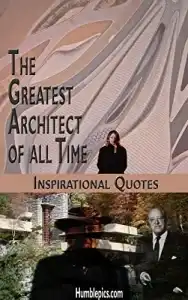
If you enjoyed this exploration of architectural philosophy, it was inspired by the full collection in our book, 1011 Quotes from The Greatest Architects of All Time. You can find all 1011 insights in our complete volume, available now in our digital collection.
Explore our complete digital bookstore collection →
The balance between form and function in architecture mirrors the balance between imagination and logic in science. This is perfectly illustrated in Einstein on Imagination. Yet, how we build our world is also influenced by who holds the resources, a concept explored in The Rigged Game: How Privilege Changes Who We Are.