How to Teach ‘Lateral Thinking’: 5 Brain-Bending Riddles for Your Family
Lateral thinking is the rare cognitive skill of solving problems by challenging your own assumptions and attacking challenges from a new, unexpected direction. The most effective—and engaging—way to teach this critical thinking framework to children and adults alike is through the structured misdirection of classic riddles.
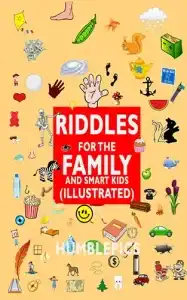
While spending months compiling and illustrating the 187 puzzles for the Riddles for the Family and Smart Kids compendium, I realized that riddles are not just games; they are intense cognitive workouts. They expose our mental blind spots and force us to break linear thought patterns. Here are five classic riddles I selected from the collection, along with the specific lateral thinking lesson each one teaches.
Thinking Sideways: 5 Riddles to Challenge Your Assumptions
1. The Assumption Riddle
The Riddle: “A man is in his car. He sees three doors: a red door, a blue door, and a green door. Which door does he open first?”
The Answer: The car door.
The Lesson: This riddle is brilliant because it immediately makes the listener assume the “red, blue, or green” doors are the only options. It teaches kids to question the very premises of a problem. Before you try to solve for “X,” you must first step back and make sure “X” is actually the right question.
2. The “Multiple Meanings” Riddle
The Riddle: “What has many keys but can’t open a single lock?”
The Answer: A piano.
The Lesson: This riddle teaches that language is slippery. We hear “keys” and our brain instantly locks onto one strict definition (“a key for a door”). Lateral thinking is the ability to break that first, obvious association and ask, “What else could ‘key’ mean?” It is a lesson in flexible, creative vocabulary.
3. The “Properties” Riddle
The Riddle: “What is full of holes but still holds water?”
The Answer: A sponge.
The Lesson: This riddle forces us to think about physical properties. Our brain hears “full of holes” and “holds water” and sees an immediate contradiction. We assume “holes” inherently lose water. The lateral thinker ignores that assumption and simply searches for an object that naturally possesses both properties. This is the core of scientific, out-of-the-box thinking.
4. The “Wordplay” Riddle
The Riddle: “What can you catch, but not throw?”
The Answer: A cold.
The Lesson: Similar to the piano, this riddle plays on the different definitions of a verb. We get stuck on the physical act of “catching” and “throwing” a ball. The answer requires a mental leap to a completely different, metaphorical context. It teaches us to “zoom out” and consider all possible meanings of an action.
5. The “Red Herring” Riddle
The Riddle: “You’re in a dark room with a candle, a wood stove, and a gas lamp. You only have one match. What do you light first?”
The Answer: The match.
The Lesson: This riddle is a masterclass in misdirection. It floods your brain with “red herrings” (the candle, stove, and lamp) to make you focus your attention on the wrong part of the problem. The lateral thinker ignores the noise, identifies the first, logically necessary step, and solves the problem instantly.
Riddles aren’t just for fun; they are a powerful workout for the brain. They are a fun, engaging way to teach your family the real-world skill of lateral thinking.
If you enjoyed these five, our book Riddles for the Family and Smart Kids will help you all become master lateral thinkers. This book is a unique collection of 187 riddles with illustrated answers. It is designed specifically for families because the different pictures actively guide the answers. If you don’t know the answer, every page has a collage of images to give you a visual clue! The text answers are in the back of the book, but you must try to find the correct picture first.
Explore our complete digital bookstore collection →
Solving riddles is excellent practice, but it is only one specific type of cognition. To build a more robust mental toolkit, you need to broaden your approach by learning How to Think Smarter, which covers logical fallacies and mental models that apply to everyday decisions.