Manufacturing Consent: 5 Noam Chomsky Quotes That Will Change How You See the Media
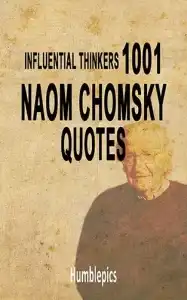
Noam Chomsky, the groundbreaking linguist, is perhaps even more famous as the world’s most prominent political dissident. For decades, his central project has been a relentless deconstruction of power and the systems that protect it. His most famous concept, “Manufacturing Consent,” argues that media in a democratic society serves the same function as outright propaganda in a dictatorship.
It’s a challenging idea, but his analysis provides a powerful toolkit for thinking critically about the news we consume. Let’s explore five of his key quotes that reveal how this system works.
Five Lessons on Power & Media
Understanding the mechanisms of manufacturing consent and media bias.
Lesson 01The Spectrum of Acceptable Debate
“The smart way to keep people passive and obedient is to strictly limit the spectrum of acceptable opinion, but allow very lively debate within that spectrum.”
This is “manufacturing consent.” Media allows fiery arguments (e.g., how to fight a war), but the fundamental assumption (that the war should happen) is never questioned.
Lesson 02The Propaganda Model
“The function of the media is to… inculcate individuals with the values that will integrate them into the institutional structures.”
Media is a business. News that challenges the interests of owners, advertisers, or the government is naturally filtered out by economic pressures, not necessarily conspiracy.
Lesson 03Responsibility of Intellectuals
“It is the responsibility of intellectuals to speak the truth and to expose lies.”
Education brings a moral burden. Intellectuals must challenge power, not serve it. Silence in the face of injustice is complicity.
Lesson 04Illusion of “National Interest”
“The ‘national interest’ is largely a fiction, created by dominant social groups…”
“National interest” is often a euphemism for “corporate interest.” We must analyze who actually benefits from a policy, and who pays the price.
Lesson 05True Meaning of Freedom
“If we don’t believe in freedom of expression for people we despise, we don’t believe in it at all.”
The fundamental test of a free society is not supporting friends, but defending the rights of enemies to speak.
Noam Chomsky’s ideas are a powerful, rigorous, and often uncomfortable lens through which to view the world. They challenge our deepest assumptions about our society, our media, and our own role within it.
If you found this analysis insightful, it was inspired by the full collection in our book, 1001 Noam Chomsky quotes. You can explore his complete thoughts on media, power, and human nature in our complete volume, available now on Amazon.
Check out our top titles on amazon!
Chomsky reveals how media shapes public opinion, but the control mechanisms go even deeper. To understand how the very words we use limit our ability to dissent, explore What Our Language Habits Reveal.
1. Lesson: The “Spectrum” of Acceptable Debate
“The smart way to keep people passive and obedient is to strictly limit the spectrum of acceptable opinion, but allow very lively debate within that spectrum.”
This is the core of “manufacturing consent.” Chomsky argues that the media creates an illusion of a free and open debate by allowing fiery arguments within a narrow, pre-approved set of boundaries. For example, politicians and pundits may argue over how to conduct a war, but the fundamental assumption that the war should happen is never questioned. This makes the audience feel informed and engaged, while ensuring that the core interests of power are never challenged.
2. Lesson: The Role of the Media (Propaganda Model)
“It is the function of the media to amuse, entertain, and inform, and to inculcate individuals with the values, beliefs and codes of behavior that will integrate them into the institutional structures of the larger society.”
Chomsky doesn’t argue that journalists are “liars.” He argues they are part of a system. In his “Proaganda Model,” he explains that the media is a business, and like any business, it serves its owners and advertisers (corporate interests) and its primary sources (the government). News that challenges those interests is naturally filtered out, not by a grand conspiracy, but by the simple, everyday biases and pressures of the industry.
3. Lesson: The Responsibility of Intellectuals
“It is the responsibility of intellectuals to speak the truth and to expose lies.”
Chomsky places a profound moral burden on those with privilege and education. He argues that intellectuals, academics, and journalists have a duty to challenge power, not to serve it. He is deeply critical of “experts” who use their credentials to justify the actions of the powerful, rather than using their platform to give a voice to the voiceless. For Chomsky, silence in the face of injustice is complicity.
4. Lesson: The Illusion of “National Interest”
“The ‘national interest’ is largely a fiction, created by dominant social groups to justify their policies… It’s not that they’re lying; it’s that they have internalized a worldview that identifies their own special interests with the general interest.”
This quote forces us to ask a critical question: When a politician says “This is for the good of the country,” who do they mean? Chomsky argues that “national interest” is often a euphemism for “corporate interest” or “the interest of the elite.” He challenges us to look past the patriotic language and analyze who actually benefits from a given policy, and who pays the price.
5. Lesson: The True Meaning of Freedom
“If we don’t believe in freedom of expression for people we despise, we don’t believe in it at all.”
This is Chomsky’s fundamental test for a free society. It’s easy to support free speech for people we agree with. The real test is whether we are willing to defend the right of our worst enemies to speak. He argues that as soon as we allow the government to decide who can’t speak, we have given up the principle entirely and opened the door for our own censorship tomorrow.