How to Build a Personal Philosophy: 5 Steps to a More Meaningful Life
A personal philosophy is not an academic luxury; it is a practical operating system for making better decisions, avoiding burnout, and finding meaning. By intentionally defining your core values, selecting the right intellectual heroes, and building daily habits, you can stop reacting to life and start designing it.
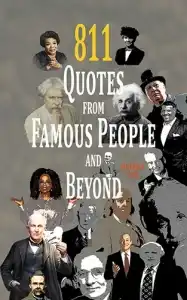
While compiling the 811 Quotes from Famous People and beyond compendium, I realized a profound truth: the most successful people in history did not “wing it.” From ancient emperors to modern scientists, they all constructed a deliberate cognitive framework for their lives. Based on my research into the minds of hundreds of historical figures, I have distilled their collective wisdom into a simple 5-step process to help you build your own unshakeable personal philosophy.
How to Build Your Personal Philosophy: A 5-Step Guide
1. Step: Define Your Core Values (Your “North Star”)
“If you don’t stand for something, you will fall for anything.” – Alexander Hamilton
You cannot build a strong life on a weak foundation. Your first step is to define your “non-negotiables.” What do you truly stand for? Is it Honesty? Growth? Compassion? Freedom? Choose 3-5 words. This is your “North Star.” When you have a hard decision to make, you will simply ask: “Which choice aligns with my values?”
2. Step: Find Your “Heroes” (Steal Like an Artist)
“If I have seen further, it is by standing on the shoulders of giants.” – Isaac Newton
You don’t need to invent your philosophy from scratch. Learn from the “giants.” Who do you admire, living or dead? Is it the resilience of Maya Angelou? The curiosity of Einstein? The discipline of Marcus Aurelius? Study their lives and their ideas. Your own philosophy will be a creative blend of the best ideas you’ve ever encountered.
3. Step: Ask the Big Questions (Define Your “Reality”)
“The unexamined life is not worth living.” – Socrates
This is the hard work. You must sit down and actually ask the big questions. What do you believe about…
- Meaning? (Are we here for a reason, or do we create our own?)
- Success? (Is it money? Happiness? Impact?)
- Mortality? (How does death inform how I live today?)
You don’t need the “right” answers. You just need your answers. This is what stops you from “sleepwalking” through life.
4. Step: Build Your “System” (Turn Values into Habits)
“We are what we repeatedly do. Excellence, then, is not an act, but a habit.” – Aristotle
A philosophy is useless if it’s just “thoughts.” It must become action. Your values must become your habits.
- If your value is “Growth,” your habit is “Read 20 pages a day.”
- If your value is “Compassion,” your habit is “Practice active listening.”
- If your value is “Health,” your habit is “Go for a walk every morning.”
Your daily habits are the real-world proof of your philosophy.
5. Step: Evolve (It’s a Draft, Not a Stone)
“The only constant in life is change.” – Heraclitus
In my research curating hundreds of historical quotes, the one constant among great minds was their willingness to change their minds. The person you are today is not the person you will be in 10 years. Your philosophy must be allowed to grow and evolve. The beliefs that served you in your 20s may not work in your 40s. Be open to new ideas, new “heroes,” and new experiences. A great personal philosophy is not a rigid prison; it’s a living, breathing guide that adapts with you.
What is a Personal Philosophy? Essential Quotes to Define Your Path
To help you define the true meaning of a personal philosophy, here are additional highlights extracted directly from our complete volume of historical wisdom.
Quotes on Creating Your Own Philosophy
“The individual has always had to struggle to keep from being overwhelmed by the tribe.” – Friedrich Nietzsche
“I am the master of my fate, I am the captain of my soul.” – William Ernest Henley
“Knowing yourself is the beginning of all wisdom.” – Aristotle
Quotes on Values and Meaning
“He who has a why to live for can bear almost any how.” – Friedrich Nietzsche
“Your time is limited, so don’t waste it living someone else’s life.” – Steve Jobs
Building a personal philosophy is the most important work you will ever do. It’s the engine that drives your decisions, habits, and ultimately, the meaning of your life.
If you are ready to begin this work and need a library of “giants” to learn from, our book 811 Quotes from Famous People and beyond is the perfect starting point. It’s a collection of the “timeless wisdom” you can use to build your own.
Explore our complete digital bookstore collection →
Building a personal philosophy requires examining the giants who came before us. For a focus on individualism and self-actualization, consider Nietzsche: Become Who You Are. Conversely, if your philosophy leans towards scientific realism, the Pinker & Harris Case for Reason offers a modern framework for truth.