Shakespeare's 5 Core Themes: [The Psychology of Humans]
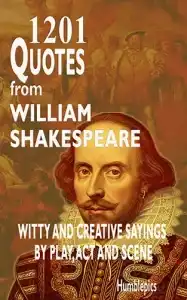
Shakespeare’s plays are not merely historical literature; they are the original psychological blueprints of human behavior. By decoding his timeless themes of ambition, jealousy, and madness, modern readers can understand the universal emotional drivers that still dictate our social and personal lives today.
While spending months categorizing his texts by play, act, and scene to compile 1201 Quotes from William Shakespeare, I realized exactly why we still study a playwright who died over 400 years ago. He didn’t just write dialogue; he wrote the “source code” for human nature. I discovered that his works are not just collections of witty sayings, but precise, diagnostic maps of the emotions that define us. Much like modern psychologists have mapped out how your mind works, Shakespeare coded these behavioral theories into his characters. Here are five of the core human themes I extracted from his plays that will help you better understand the psychology of the people around you.
What Are the Main Themes in Shakespeare’s Plays?
The most prominent themes in William Shakespeare’s plays revolve around the core drivers of human psychology. His most famous works explore the corrupting power of ambition, the steadfast nature of true love, the destructive poison of jealousy, the strategic use of madness, and the eternal conflict between justice and mercy.
The 5 Core Themes in Shakespeare’s Plays
1. Theme: The Price of “Vaulting Ambition”
“I have no spur / To prick the sides of my intent, but only / Vaulting ambition, which o’erleaps itself / And falls on the other.” – Macbeth
No one has ever written more powerfully about the corrupting nature of ambition. In Macbeth, Shakespeare shows us how a “good” man can be driven by his own desire for power to commit horrific acts, ultimately destroying himself. It’s the timeless warning that unchecked ambition doesn’t just “fail”; it “o’erleaps itself” and leads to ruin.
2. Theme: The Nature of True Love
“Love is not love / Which alters when it alteration finds, / Or bends with the remover to remove. / O no! it is an ever-fixed mark…” – Sonnet 116
Shakespeare invented our modern language of love. He shows us its every form: the star-crossed passion of Romeo and Juliet and the witty, intellectual battle of Much Ado About Nothing. This famous sonnet gives us his ultimate definition: true love isn’t a fleeting feeling. It’s an “ever-fixed mark”—a constant, unshakeable force that withstands any storm.
3. Theme: The Poison of Jealousy
“O, beware, my lord, of jealousy; / It is the green-ey’d monster which doth mock / The meat it feeds on.” – Othello
In Othello, Shakespeare gives us a terrifying masterclass in psychological manipulation. He personifies jealousy as a “green-ey’d monster” that consumes its host. This isn’t just a metaphor; it’s a diagnosis. He shows how jealousy is a poison of our own making, a delusion that destroys our ability to see the truth, and ultimately, destroys the very love we were afraid to lose.
4. Theme: The Mask of Madness
“Though this be madness, yet there is method in’t.” – Hamlet
In analyzing Hamlet’s dialogue for the compendium, I noticed a distinct psychological tactic: Shakespeare uses madness not as a mental breakdown, but as a deliberate strategic shield. Characters like Hamlet feign insanity to bypass the political censorship and corruption of the sane world around them. This reveals a profound modern lesson about social dynamics: sometimes adopting the mask of the comedian or the erratic outsider is the only safe way to critique a fundamentally broken system without facing immediate destruction. To understand the deeper subconscious mechanics of this kind of psychological shielding, it helps to explore the foundational concepts of Freud vs. Jung.
5. Theme: The Conflict of Mercy vs. Justice
“The quality of mercy is not strain’d, / It droppeth as the gentle rain from heaven / Upon the place beneath…” – The Merchant of Venice
This is one of the most timeless human conflicts. What is more important: the cold, hard letter of the law (Justice), or the human capacity for forgiveness (Mercy)? In this famous speech, Portia argues that mercy is a divine, restorative force. It’s a debate that we still have every day, in our courtrooms and in our own hearts.
Shakespeare’s witty sayings are merely the entry point. After curating over a thousand of his lines, I can assure you that the real treasure is the timeless, diagnostic understanding of the human heart that lies beneath the poetry.
More Quotes Exploring Shakespeare’s Themes
If you are looking for specific wisdom on human nature, here are additional highlights extracted directly from our complete volume exploring his most famous themes.
Shakespeare Themes of Life and Destiny
“All the world’s a stage, / And all the men and women merely players.”
“We are such stuff / As dreams are made on, and our little life / Is rounded with a sleep.”
“It is not in the stars to hold our destiny but in ourselves.”
Shakespearean Themes of Love and Folly
“The course of true love never did run smooth.”
“Love looks not with the eyes, but with the mind, / And therefore is winged Cupid painted blind.”
“Lord, what fools these mortals be!”
Map the Source Code of Human Nature
Don’t rely on scattered internet searches. Get the definitive physical collection of Shakespeare’s most profound thoughts on ambition, love, and madness.
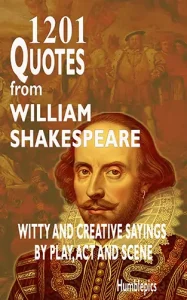
Discover the Complete William Shakespeare Quote Collection →
Explore our complete digital bookstore collection →
Shakespeare was a master of drama, but social commentary requires a lighter, sharper touch. For a masterclass in using wit to expose societal flaws, we turn to Jane Austen’s social satire or the brilliant, cynical life lessons of Oscar Wilde.