You’re Not in Love, You’re Addicted: The Brain Science of Desire
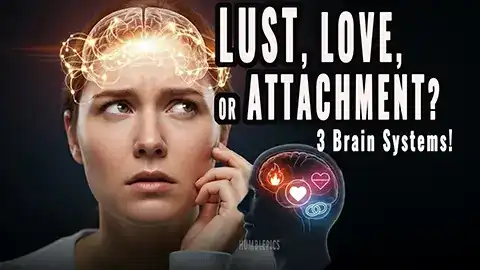
We romanticize love and lust as mystical, fleeting emotions, but neuroscience reveals a much more mechanical reality. By understanding how neurochemicals like dopamine drive our primal “seeking system,” we can decode the intense biological impulses behind desire, romantic obsession, and the agony of heartbreak.
While researching evolutionary biology and the neurochemistry of human behavior for the Humblepics Book Collection, I discovered that our cultural narrative about love is scientifically backwards. We are taught that dopamine is the “pleasure molecule,” but anthropologists and neuroscientists like Dr. Helen Fisher and Jaak Panksepp have proven otherwise. According to biology, romance isn’t just a feeling; it is an ancient, primal drive built into our brain’s core operating system. Here is the fascinating science behind why we crave, why we fall in love, and why rejection physically hurts.
The Biology of Bliss: How Your Brain Processes Love
1. The Big Dopamine Misconception
For decades, pop psychology has told us that dopamine equals happiness. This is scientifically incorrect. Dopamine is not the pleasure of the reward (the “liking”); it is the motivation you feel before the reward (the “wanting”).
It is the “go-getter” molecule—the biological engine of pursuit, anticipation, and craving. Neuroscientist Jaak Panksepp called this the “Seeking System.” It is a powerful, all-consuming drive to explore, hunt, and acquire. In clinical experiments, rats with an active seeking system will cross an electrified grid just for the mere chance of getting a reward. They aren’t “happy”—they are relentlessly driven. Dopamine is the high-octane gasoline of human motivation.
2. Sex: How Hormones “Modulate” the Engine
This dopamine-fueled “wanting” system is the exact same circuitry that governs our drive for sex. However, hormones like testosterone and estrogen do not actually create the drive.
Think of dopamine as the gasoline, and hormones as the “oil” that makes the engine run hotter and more efficiently. This leads to a fascinating biological insight: studies show that giving a man more testosterone doesn’t increase the actual pleasure he gets from sex. Instead, it dramatically increases his desire for it. He thinks about it more, seeks it out more aggressively, and is more motivated to attain it. His seeking system is simply running in a higher gear.
3. Love: The Seeking System Hijacked
According to biological anthropologist Dr. Helen Fisher, romantic love is not an emotion. It is a primal drive. It is your brain’s seeking system being hijacked and locked onto a single, specific target: another human being.
This biological framework explains everything about what “falling in love” actually feels like:
- The Obsession: You cannot stop thinking about them. They are the first thing on your mind when you wake up. This is your seeking system operating in overdrive.
- The Craving: You feel a deep, physical, agitating need to be with them. This is the dopamine “wanting” system demanding a target.
- The Addiction: When researchers look at fMRI scans, the brains of people newly in love look identical to the brains of cocaine addicts. You are literally, chemically addicted to another person.
4. Heartbreak is Biological Withdrawal
This neurological framework also explains why a breakup is so devastating. Why does rejection hurt so much?
When you are rejected, you are not just experiencing a “sad feeling.” Your brain’s core survival circuit—the exact same ancient circuitry that drives you to find food, seek water, and acquire this specific person—is suddenly being denied its target.
You are experiencing acute withdrawal. The agony of heartbreak isn’t a romantic metaphor; it is a harsh biological reality.
5. The 3 Systems That Rule Our Lives
Ultimately, our brains are running three distinct, ancient neurochemical programs, all designed for the evolutionary purpose of reproduction and survival:
- The Lust System (The Hormones): The biological “oil” (testosterone/estrogen) that makes you want sexual gratification.
- The Romantic Love System (The Drive): The dopamine-fueled “seeking” system that locks your motivation onto one specific person.
- The Attachment System (The Bond): The “cuddle” hormones (oxytocin and vasopressin) that make you feel calm, safe, and deeply bonded to that person after the exhausting chase is over.
These systems are not “you.” They are ancient, powerful pieces of evolutionary machinery. Understanding them doesn’t make love any less magical, but it helps explain exactly why it is the most powerful—and sometimes most dangerous—force on earth.
Explore our complete digital bookstore collection →
While brain circuits drive our specific desires for love and reproduction, they operate within a much larger psychological system. To get the “big picture” of human consciousness and understand why we do the things we do, read our comprehensive guide on How Your Mind Works.