Alone Together: Why We’re Always Connected But Still So Lonely
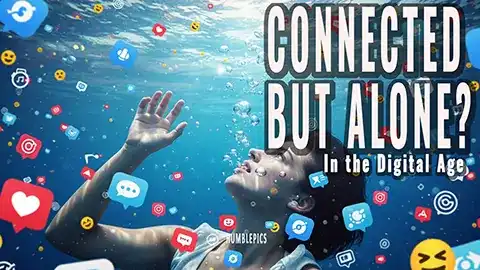
We are living in an era defined by the “Goldilocks Effect”—we want people not too close, not too far, but just right. By prioritizing highly controlled digital connection over messy, real-world conversation, we have engineered a society that is constantly communicating yet profoundly lonely.
While researching the psychological impact of digital communication and the seminal work of MIT sociologist Sherry Turkle for the Humblepics Book Collection, I realized that our devices haven’t just changed what we do; they have fundamentally changed who we are. We have developed a new way of being: “Alone Together.” We are surrounded by people, but we are all trapped in our own digital worlds. Here is a breakdown of the digital paradox, why texting feels safer than talking, and how to reclaim your capacity for genuine connection.
The Digital Paradox: Why Connection Breeds Isolation
1. The Three Dangerous Fantasies
Think about the last time you were at a dinner, a meeting, or even a funeral. How many people were staring at their phones? Just a few years ago, this would have been considered shocking behavior. Today, it is our baseline normal. This happens because technology offers our brains three powerful, subconscious fantasies:
- We can put our attention wherever we want it.
- We will always be heard.
- We will never have to be alone.
This last fantasy is the most dangerous. At the first hint of boredom—at a red light, in a checkout line, during a lull in conversation—we panic and reach for our screens. Being alone now feels like a problem to be solved, rather than a natural human state.
2. The “Goldilocks Effect” and the Flight from Conversation
We have become masters of controlling our relationships. We want our friends, family, and colleagues not too close, not too far, but just right. We desperately want to connect, but only at a safe distance and in precise amounts that we can control.
A modern businessman will admit he doesn’t talk to his colleagues anymore because he “doesn’t want to interrupt them” while they are on email. But the psychological truth is that he is the one who doesn’t want to be interrupted. This is the great modern trade-off: we have sacrificed vulnerable conversation for mere transactional connection.
3. The Illusion of Control (Why We Prefer Texting)
If you ask people what is wrong with a real, face-to-face conversation, they will eventually tell you the truth: it happens in real-time, and you cannot control what you are going to say.
Real human relationships are messy, demanding, and highly unpredictable. Technology allows us to “clean them up.”
- Texting, DMs, and social posts allow us to edit, delete, and retouch our words before anyone sees them.
- We can present the idealized self we want to be, rather than the flawed self we actually are.
- We can connect in tiny, manageable “sips.”
The problem is that all those little “sips”—the texts, the likes, the quick emojis—do not add up to one big gulp of real conversation. These sips are perfectly fine for sharing raw information (“I’m running 5 minutes late!”), but they completely fail at the most important job of human interaction: coming to truly know and understand another person.
4. The Illusion of Companionship
This flight from real conversation has a devastating psychological cost. We naturally use conversations with others to learn how to have conversations with ourselves. Without that skill, our capacity for deep self-reflection is compromised, creating a painful, lingering feeling: “No one is really listening to me.”
This exact feeling is what makes a TikTok “For You” page or a personalized Instagram feed so incredibly addictive. The algorithms provide automatic listeners. We are so lonely that we will accept pretend empathy from a machine as if it were the real thing. We are designing a digital ecosystem that offers the illusion of companionship without the demanding responsibilities of actual friendship.
5. The Real Cure: Reclaiming Solitude
The terrible irony of the modern age is that our constant “connecting” is actively setting us up for isolation. We have adopted a new philosophy: “I share, therefore I am.” We define ourselves by sharing our thoughts exactly as we are having them. If we aren’t connected, we don’t feel like we exist.
But the psychological truth is stark: If you are not able to be alone, you will only be more lonely.
The cure for digital loneliness is not more connection. The cure is solitude. Solitude is not a problem to be solved; it is a critical skill to be cultivated. It is the quiet space where you gather yourself, process your emotions, and build a sense of self that is strong enough to connect with others authentically. If we don’t learn to be alone, we end up using other people as spare parts to artificially prop up our fragile egos.
How to Reclaim Conversation (Action Steps)
The good news is that we can reverse this trend. We just need to be highly intentional about our environment:
- See Solitude as a Feature, Not a Bug: Do not panic when you are alone. Put the phone down. Let your mind wander. This boredom is where true self-reflection begins.
- Create Sacred Spaces: Designate the kitchen, the dining room, or the car as strict “phone-free” zones. Protect these areas for human interaction only.
- Listen to the “Boring Bits”: Real conversation isn’t just a highlight reel. When we stumble, hesitate, or lose our words—that is exactly when we reveal who we truly are. Do not interrupt that vulnerable process by looking down at your screen.
Technology isn’t the enemy, but our fantasies about it are. It promises a simpler, cleaner, and more controllable life. But a meaningful life is, by definition, complicated and messy. Put the phone down. It’s time to talk.
Explore our complete digital bookstore collection →
The digital world doesn’t just isolate us; it overwhelms us with endless options. This constant decision fatigue creates a unique type of modern misery, which we explore in The Tyranny of Too Much.